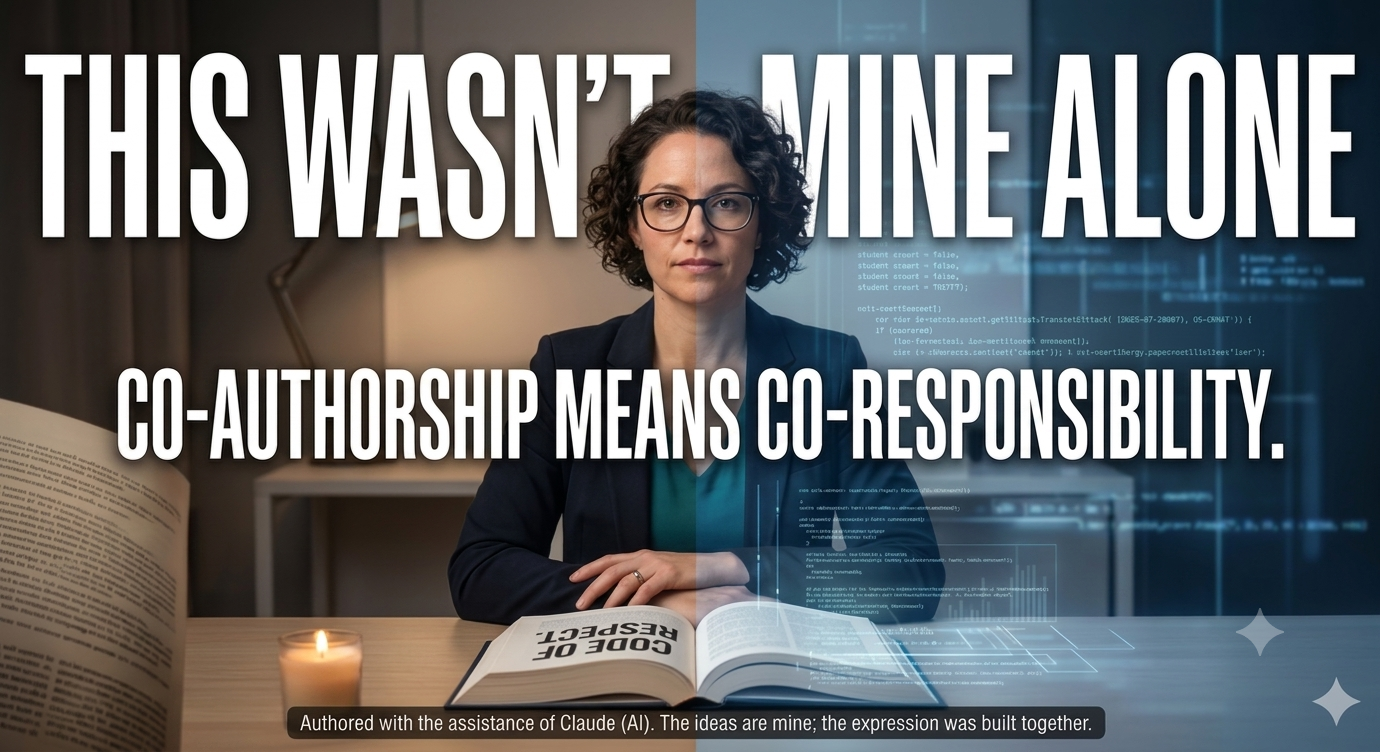
The End of the Solitary Genius?
For generations, creativity has been surrounded by a powerful myth. The great novelist writing alone. The inventor working in isolation. The artist producing masterpieces through pure inspiration. Artificial intelligence is forcing us to question that story. Not because human creativity is disappearing. Because creativity has always been more collaborative than we were willing to admit. Today, AI has simply become another participant in the creative process. The challenge is no longer whether we use AI. It is whether we are honest about how we use it.
Creativity Has Never Been a Solo Activity
Every creator builds upon the work of others. Writers are shaped by books. Researchers build on previous discoveries. Designers borrow from visual traditions. Entrepreneurs refine ideas that already exist. Even our language belongs to countless generations before us. The image of the completely independent genius has always been incomplete.Human creativity has always emerged through conversation with teachers, colleagues, mentors, history, and culture.AI makes that collaboration more visible than ever before.
AI Is Becoming a Creative Collaborator
Modern AI systems do far more than generate text.
They can help creators:
- Brainstorm new ideas
- Challenge assumptions
- Improve structure
- Rewrite unclear passages
- Generate alternative perspectives
- Detect logical gaps
- Refine language
- Accelerate research
The machine does not replace human judgment.
It expands the creative conversation.
Many researchers now describe this process as human-AI co-creation or collaborative intelligence.
Who Is the Author?
As AI becomes part of creative workflows, authorship becomes more complex.
A human contributes:
- Vision
- Experience
- Purpose
- Values
- Critical judgment
- Final editorial control
AI contributes:
- Pattern recognition
- Alternative wording
- Structural suggestions
- Idea exploration
- Creative variation
The finished work often reflects both.
This raises difficult questions. Who deserves credit? Who owns the output? How should AI participation be disclosed? There are no universally accepted answers. But pretending AI played no role is becoming increasingly difficult.
Transparency Builds Trust
Many creators still hesitate to acknowledge AI assistance. Some fear their work will seem less authentic. Others worry audiences will value it less. Yet transparency often has the opposite effect. Openly acknowledging AI participation demonstrates confidence rather than weakness.
It tells readers:
- The ideas remain human.
- The judgment remains human.
- The responsibility remains human.
- The creative process simply included a new kind of collaborator.
Honesty strengthens credibility.
It does not diminish it.
AI Is Built on Human Knowledge
There is another ethical dimension that cannot be ignored. Every modern AI model is trained using enormous collections of human-created material.
- Books.
- Articles.
- Research.
- Code.
- Educational resources.
- Creative works.
This reality has sparked ongoing debates around:
- Copyright
- Licensing
- Attribution
- Fair use
- Compensation
- Creative ownership
These discussions are likely to shape AI policy and intellectual property law for years to come. Understanding AI co-creation therefore requires understanding both sides of the relationship:
- Humans create AI.
- AI helps humans create.
Co-Creation Also Means Co-Responsibility
AI may assist with producing content. It cannot accept responsibility for publishing it. That responsibility remains entirely human.
Creators remain accountable for:
- Accuracy
- Ethics
- Compliance
- Quality
- Bias
- Legal obligations
- Real-world impact
Using AI changes the production process. It does not change accountability.
The Future Belongs to Collaborative Intelligence
The creators who thrive in the AI era are unlikely to be those who reject AI completely. Nor will success belong to those who outsource every decision to algorithms.
Instead, the greatest advantage will belong to people who combine:
- Human creativity
- Human judgment
- Human ethics
- AI capability
This emerging model is often described as collaborative intelligence humans and intelligent systems working together while each contributes what they do best.
- Machines accelerate.
- Humans decide.
- Machines generate.
- Humans evaluate.
- Machines assist.
- Humans remain responsible.
Conclusion
Artificial intelligence is reshaping one of humanity’s oldest assumptions—that meaningful creative work is produced entirely alone. Human imagination remains indispensable. Human judgment remains essential.Human responsibility remains non-negotiable. Yet many of today’s most valuable ideas no longer emerge from isolation. They emerge through thoughtful collaboration between human intention and artificial intelligence. Recognizing that reality does not weaken creativity.
It reflects it more honestly.
References
- Margaret Boden – Research on creativity and artificial intelligence.
- Ryan Abbott – Research on AI inventorship and the DABUS cases.
- Timnit Gebru – Research on AI datasets, labor, and ethics.
- Judith Butler – Work on recognition, ethics, and responsibility.
- Research literature on human-AI co-creation and collaborative intelligence.
- AI, Justice, and the Spirit of the Law: Why Human JudgmeAI, Justice, and the Spirit of the Law: Why Human Judgment Still Matters
- AI Co-Creation: Why the Future of Creativity Is Collaborative, Not Solitary
- AI Companions and Legal Responsibility: The Framework We Don’t Have Yet
- Getty vs Stability AI: The Copyright Battle That Will Shape the Future of AI Training
- AI in Law Firms: The Window That Will Not Stay Open
